
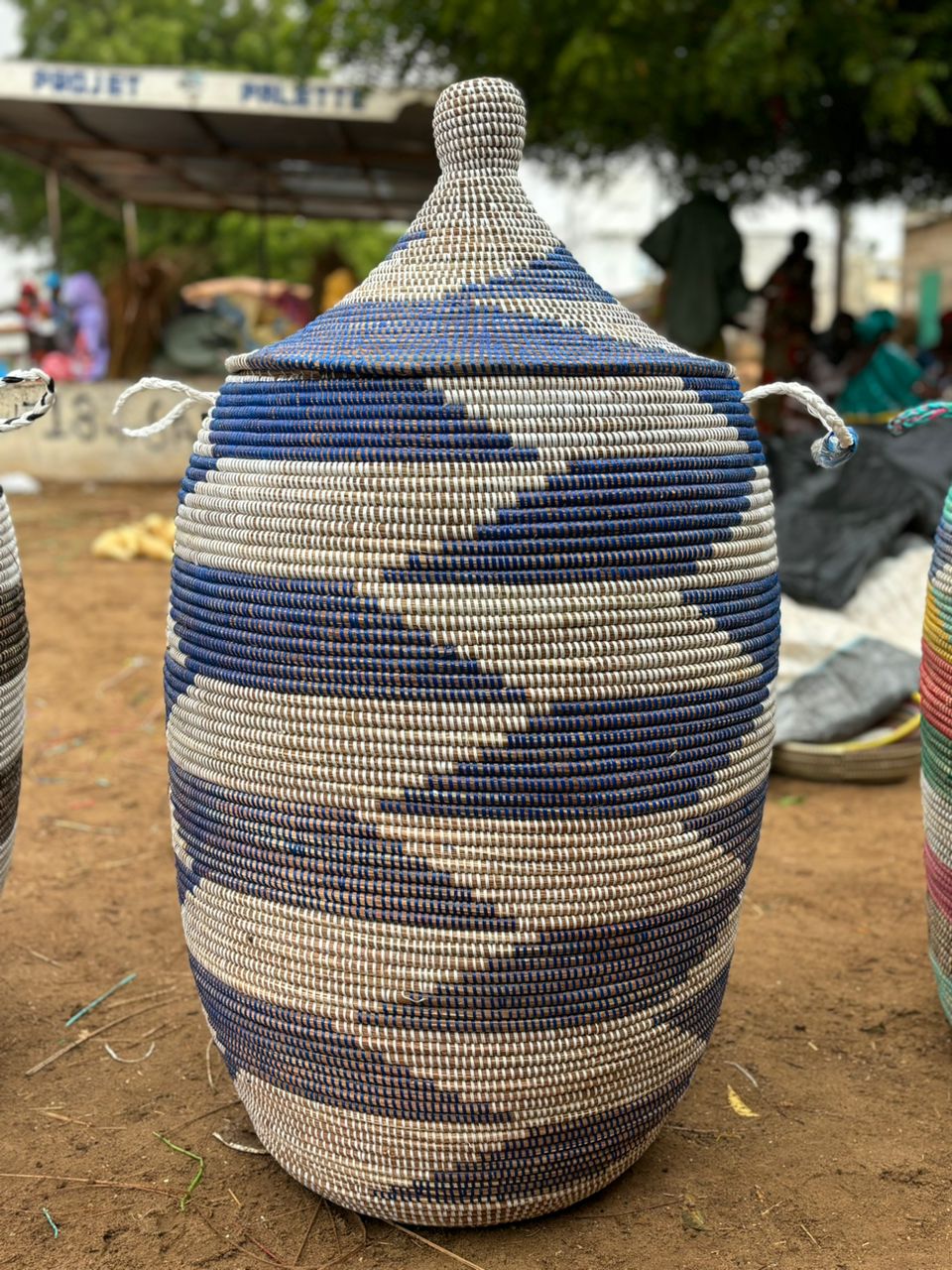
Traditional baskets from Senegal: craftsmanship and culture
Senegal, a country on the West African coast, is known for its vibrant culture, diverse traditions and rich handicrafts. Among the many handicrafts produced in the country, traditional baskets hold a special place. These baskets, often made from natural materials such as grass and reeds, are not only practical everyday objects, but also an expression of the country's cultural identity and artistic heritage.
The art of basket weaving in Senegal 
The art of basket weaving has a long tradition in Senegal, passed down from generation to generation. In many villages and communities in the country, basket weaving is a central occupation, especially for women, who usually learn the craft from their mothers and grandmothers.
Making a basket requires patience, skill and a deep understanding of the materials used. The weavers often use grass or reeds that grow in the country's wetlands. These materials are first dried and then artfully made into baskets. The techniques and patterns used are varied and vary according to the region and tribe.
The importance of patterns and colors 
A special feature of Senegalese baskets is their colorful design. Traditionally, natural colors obtained from plants and minerals are used. Today, however, synthetic colors are also widely used, allowing for a greater variety and intensity of colors.
The patterns on the baskets often have a deeper meaning. They can tell stories, reflect the social status of the owner or simply satisfy aesthetic requirements. Many of the patterns used are inspired by nature, such as animal motifs, plants or geometric shapes.
Versatility and functionality 
Senegalese baskets are extremely versatile and are used in many areas of daily life. They serve as storage baskets for food, clothing or other household items. Baskets also play an important role in traditional festivals and ceremonies, be it as gifts, as decoration or as part of the rituals.
In addition, Senegalese baskets have also gained international popularity. Their craftsmanship and aesthetic beauty make them sought-after products in craft markets around the world. Many people value them as decorative elements in their homes or as a sustainable and environmentally friendly alternative to plastic containers.
Sustainability and economic importance
The production and sale of baskets is an important source of income for many Senegalese families. At a time when awareness of sustainable and fairly traded products is growing, the handmade baskets from Senegal are finding more and more buyers who appreciate the combination of traditional craftsmanship and modern design.
By purchasing these baskets, buyers not only support local crafts but also help strengthen the economic autonomy of women in rural areas. Many organizations promote basket weaving as a means of poverty alleviation and promoting education and health.
Conclusion
The baskets from Senegal are more than just simple storage items. They are works of art that reflect the rich culture and history of the country. They combine tradition and modernity, functionality and aesthetics, craftsmanship and sustainability. Anyone who chooses such a piece is not only bringing a practical utensil into their home, but also a piece of Senegalese culture.
Whether as a gift, as a decorative element or as part of everyday life, a basket from Senegal is a symbol of the creativity and ingenuity of the people who made it. In a globalized world where more and more people value authenticity and sustainability, these baskets are an impressive example of how traditional craftsmanship can be interpreted in a contemporary way.